
Active Warrants in Traverse County
Traverse County Sheriff maintains an official warrants landing page that links to a warrant PDF. District Court may issue bench warrants after missed hearings, failure to comply with release terms, probation issues, contempt, or other court events. The Sheriff also performs court security and civil process duties, so warrant verification often crosses between the Sheriff and Court Administration.
The researched sources did not identify a Traverse County municipal, justice, or JP court warrant channel, and no official Sheriff or Wheaton Police mobile app with an app-only warrant search was located. Use the Sheriff warrant page, Sheriff phone line, MCRO case details, and Court Administration rather than assuming another local court has a separate warrant database.
The official Traverse County Sheriff warrants page is shown below.
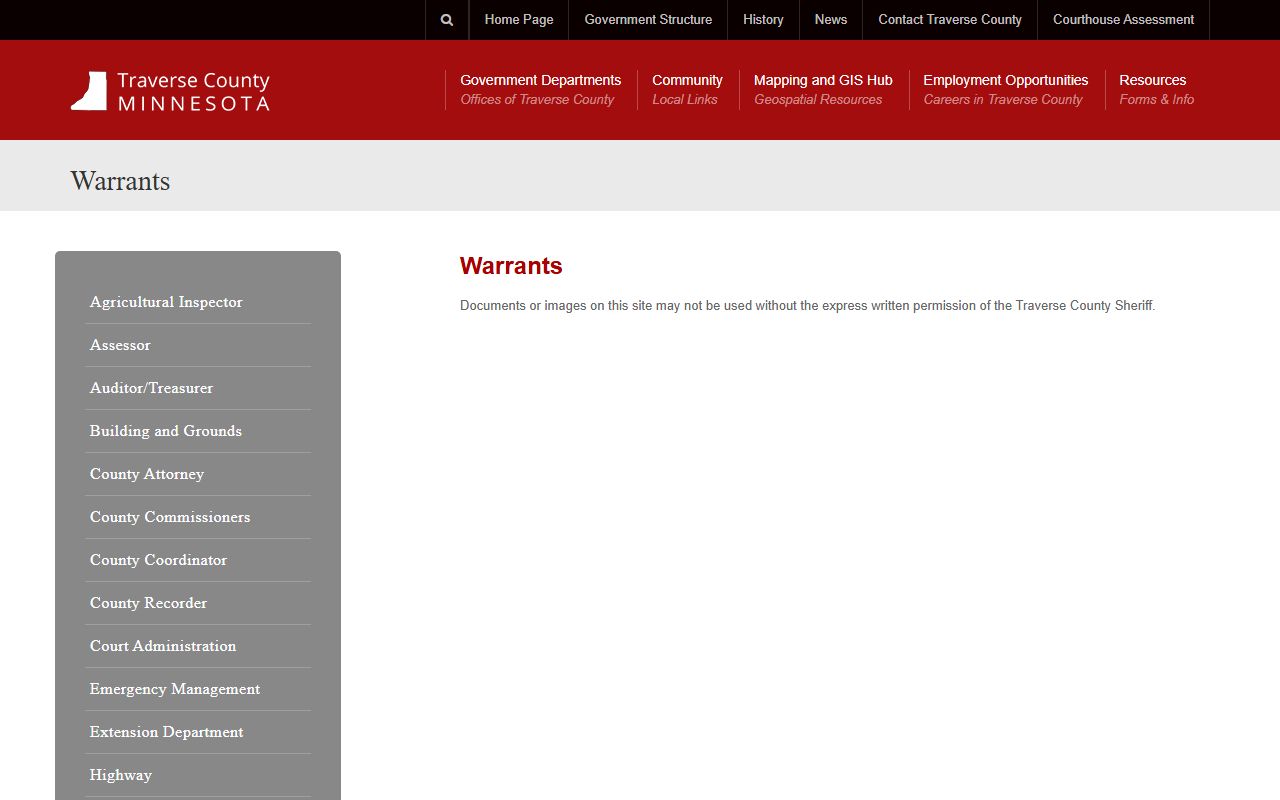
The landing page is the county-controlled access point even though the linked warrant document is hosted as a PDF.
Types of Warrants in Traverse County
Warrant terms describe different legal actions. A public warrant list may not explain every detail behind the warrant, so the case file, Sheriff, or Court Administration may be needed to confirm what issued and what must be done next.
- Arrest warrant - authorizes law enforcement to arrest after a probable-cause or charging process.
- Bench warrant - issued by a judge, often after failure to appear or violation of court conditions.
- Search warrant - authorizes a search and may be confidential until execution and filing rules allow access.
- Fugitive hold - may involve another jurisdiction, DOC, or federal authority rather than only a local case.
- Civil process - handled by the Sheriff in some matters, but it is not the same as an arrest warrant.
How to Search Traverse County Warrants
The official county channel is the Sheriff's warrant page and linked PDF. Because the warrant source is not an interactive database, use browser or PDF find if the file is text-searchable, then verify by phone before taking action. MCRO can also show an Active Warrant flag in case details, but MCRO warns that a party-level warrant flag may or may not pertain to the case being viewed.
- Open the Sheriff's official warrants page and linked PDF.
- Use PDF text search for a name if the document supports searchable text.
- Search MCRO by case number or citation number for related court history and hearing events.
- Call the Sheriff at (320) 422-7800 or Court Administration at (320) 422-6010 to verify current status.
- Do not rely only on an old download, screenshot, or third-party record site.
Traverse County Warrant Search Fields
The Sheriff's warrant list is a PDF link, not a fielded search form. That makes the access channel simple, but it also means a user may need to search the PDF manually and then call for confirmation. MCRO warrant-related searches use court case fields rather than a dedicated warrant-search form.
| Field Label | Type | Required | Notes |
|---|---|---|---|
| Warrants link | PDF link | N/A | Official warrant document linked from the Sheriff page. |
| PDF text search | Browser/PDF find | Optional | Use name search within the PDF if text-enabled. |
| MCRO Case Number | Text | Optional | Best court search for pending criminal or traffic warrant-related cases. |
| MCRO Citation Number | Text | Optional | Useful when a traffic or criminal citation led to the case. |
| Party Name | Text | Limited | Pending criminal defendant-name search does not return until conviction. |
The BCA public criminal history search is shown below because some users confuse criminal history with warrant search.
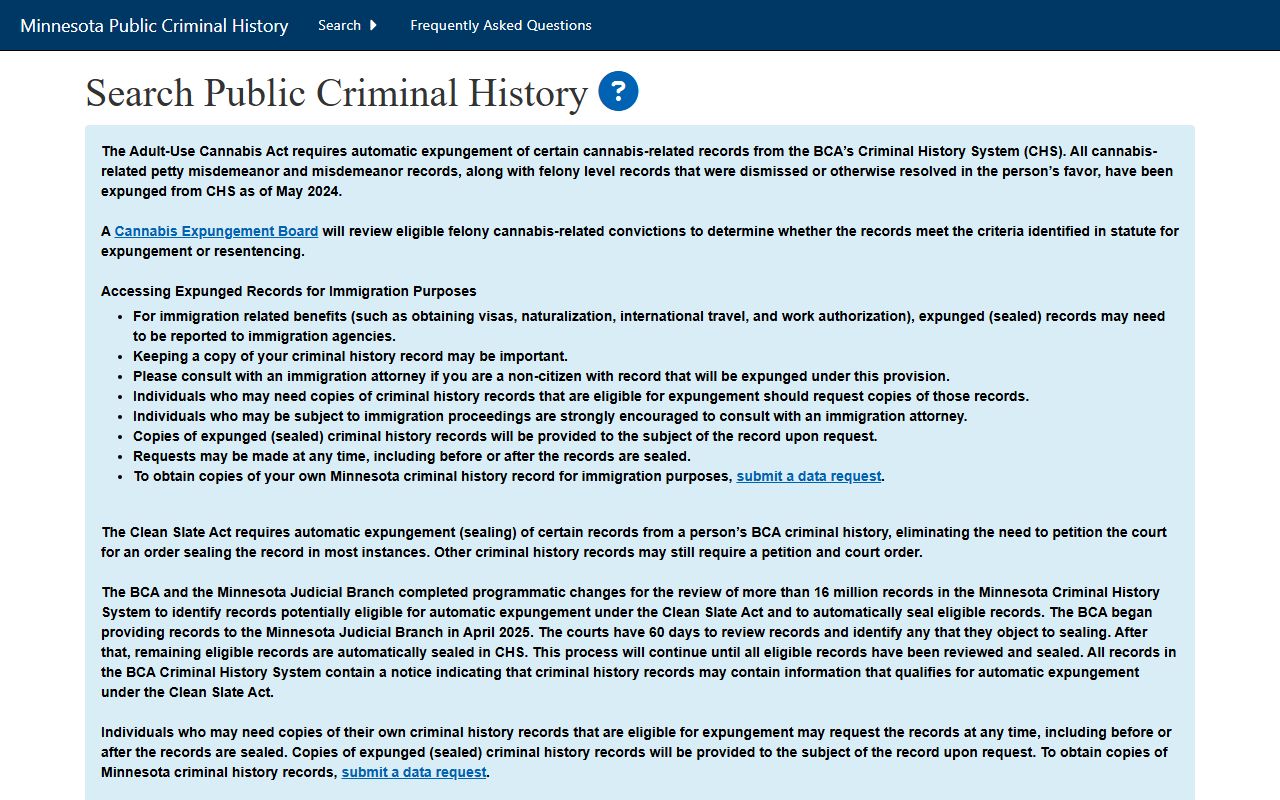
BCA history can show public conviction data, but it is not a live Traverse County warrant list.
What a Traverse County Warrant Record Shows
The research confirmed the official warrant landing page and PDF channel, but extracted text did not expose a complete column inventory from the warrant PDF. Treat the PDF itself as the official source for any visible fields, and verify by phone if a field is unclear. MCRO case data may add charge, hearing, and warrant-flag context when the case number is known.
| Field | What It Shows |
|---|---|
| Name | Person identified on the warrant list if displayed in the PDF. |
| Charge or Case Reference | Offense, court file, or warrant reason if the PDF displays it. |
| Issuing Authority | Sheriff, District Court, or related agency context when listed. |
| Bond or Bail | Amount or condition if published; verify before relying on it. |
| Current Status | Must be confirmed with the Sheriff or Court Administration because lists can change. |
What to Do If You Have an Outstanding Warrant
Confirm the warrant through the Sheriff, the official warrant PDF, MCRO case details, or Court Administration. Then identify the case number, citation number, charge, or issuing agency. If criminal charges are involved and counsel is needed, use the public defender application portal or consult an attorney before appearing or turning yourself in.
Important: Payment, bail, or recall may not instantly remove a warrant from every public or law-enforcement system.
Minnesota's general public-data access statute is shown below because warrant and sheriff records can involve government-data access rules.
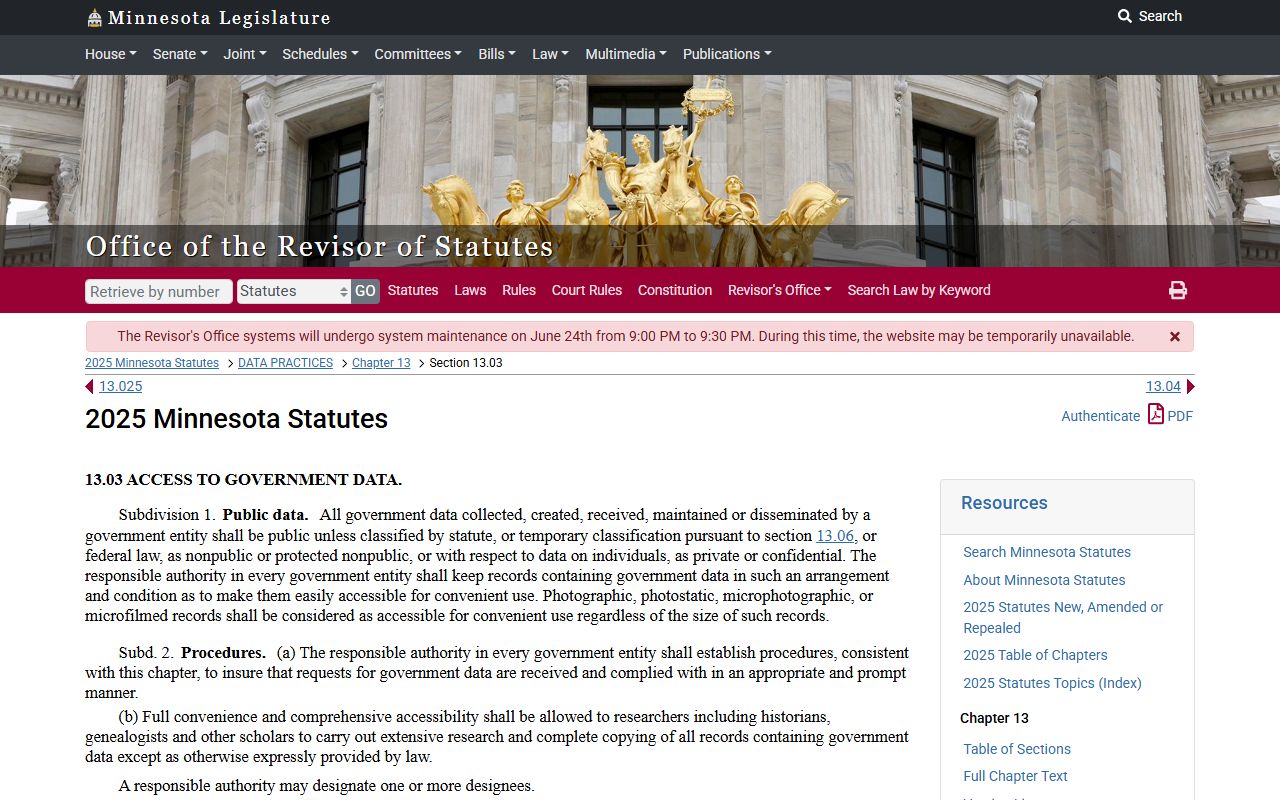
Public-data access is broad, but active law-enforcement, juvenile, sealed, and court-restricted records may still be limited.
Warrants vs Criminal History
Warrants, court charges, jail custody, DOC records, and BCA criminal history are different records. A warrant can exist before conviction. A jail roster can show custody without final court outcome. A BCA record can show public criminal history but not every active warrant. DOC tools cover people under state correctional jurisdiction or public registrant search criteria, not every Traverse bench warrant.
Minnesota's public criminal history statute is shown below because it explains the BCA history channel.
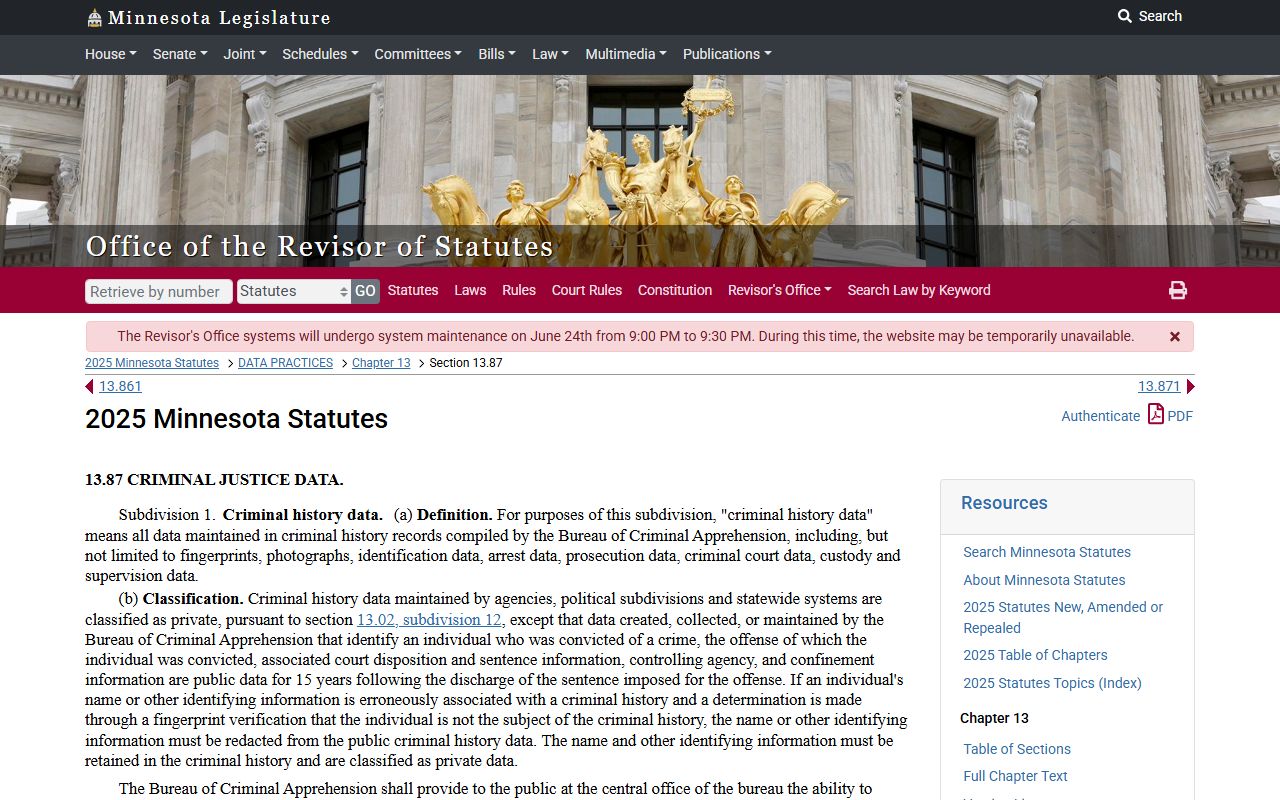
Use BCA for public criminal history and the Sheriff or court for active warrant verification.
Restricted Traverse County Warrant Records
Some warrant-related records may be restricted. Search warrants can be confidential before execution or filing. Juvenile warrant matters may be restricted. Federal warrants, DOC holds, and public registrant issues may appear in separate systems. MCRO's Active Warrant flag also needs context because it may not relate to the case a user is viewing.
The Minnesota public registrant search is shown below as a separate DOC channel, not a Traverse County warrant database.
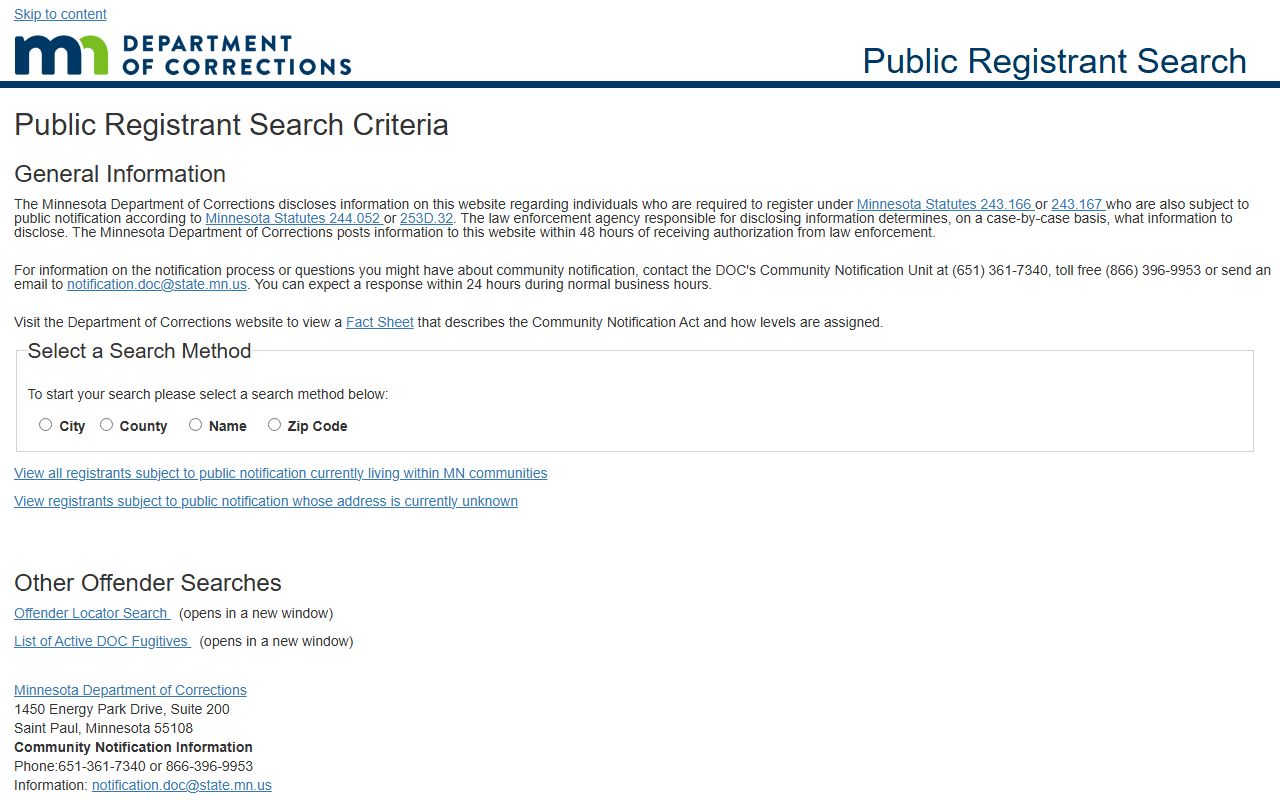
When a matter may involve state correctional supervision or registrant status, use the appropriate DOC system and still verify local warrants separately.