
About the Traverse County Court Administration Office
Traverse County Court Administration is the local record-keeping office for District Court, and the county research names Rachel Schmidt as Court Administrator. The office is located at the Traverse County Courthouse, 702 Second Avenue North, P.O. Box 867, Wheaton, Minnesota 56296, with phone number (320) 422-6010 and fax number (320) 563-4311. The Minnesota Judicial Branch lists business hours as Monday through Friday, 8:00 a.m. to 4:30 p.m., and says free parking is available. Those are the basic details a requester needs before asking for a copy or checking a docket.
Because Court Administration handles district court case records, it is the office for civil, family, probate, juvenile, criminal, traffic, and conciliation matters filed in Traverse County. It is not the office for marriage licenses, marriage certificates, or land-title records, which belong to the County Recorder. That split keeps the clerk role narrow and predictable. If the file is a district court case, Court Administration is the office to contact; if the record is a marriage or recorder record, the county's separate Recorder office is the better starting point.
Source: PACER Case Locator.
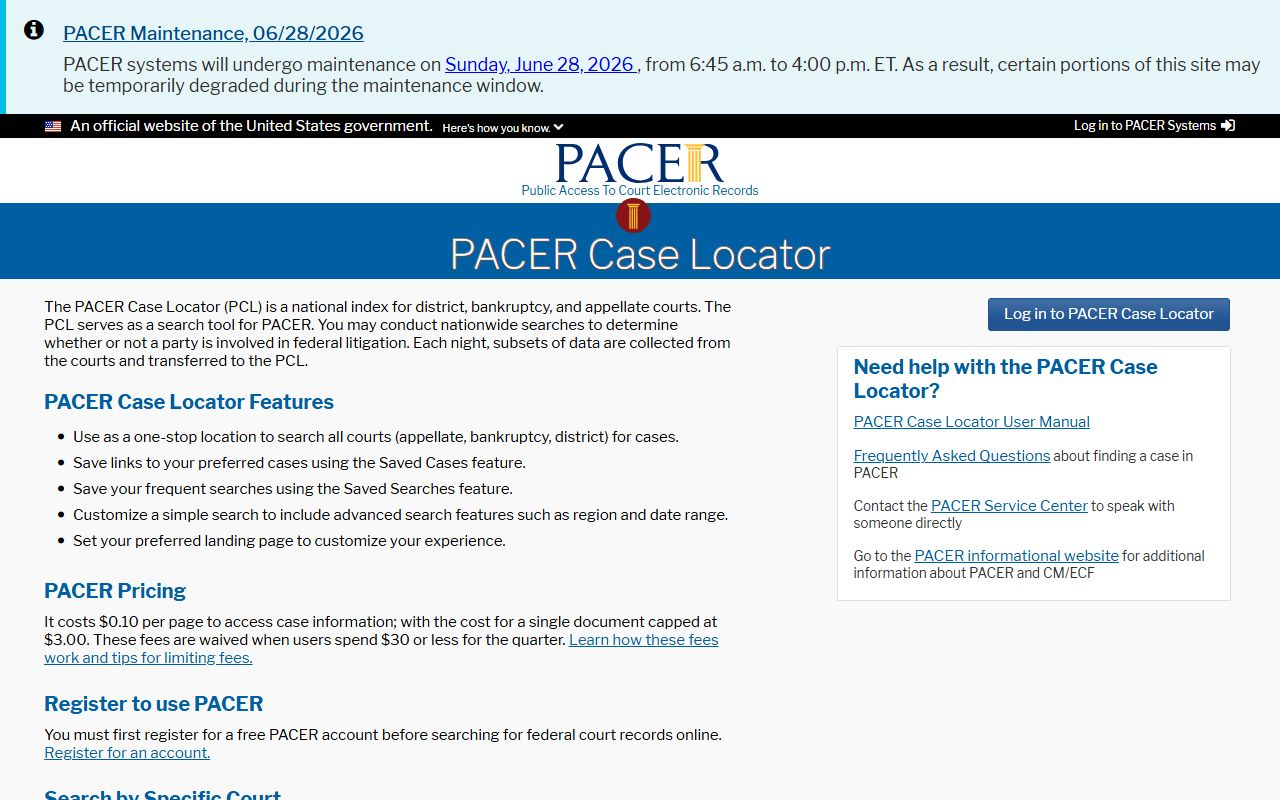
Federal records are separate from Traverse County district court records, so the case locator helps keep that boundary clear.
Traverse County Court Administration
Administrator: Rachel Schmidt
702 2nd Ave. North, P.O. Box 867
Wheaton, MN 56296
(320) 422-6010
Monday-Friday, 8:00 a.m.-4:30 p.m.
traversecountymn.gov/departments/departments/court-administration/
What Court Administration Does in Traverse County
Court Administration keeps the district court record system moving. In Traverse County that means record keeping, case flow management, certified-copy handling, and public counter service for district court files. The office also helps explain whether a document belongs in MCRO, whether a file must be requested in person, and whether the requester needs certified or uncertified copies. If a matter is not online, Court Administration is the office that can confirm whether the file exists locally or only in a paper record.
- Maintain district court case records for civil, family, probate, juvenile, criminal, traffic, and conciliation matters.
- Provide in-person public access to courthouse terminals and local counter services.
- Issue certified copies and explain the difference between certified and downloaded MCRO documents.
- Direct marriage and vital-record questions to the County Recorder instead of district court.
Source: Traverse County Recorder.
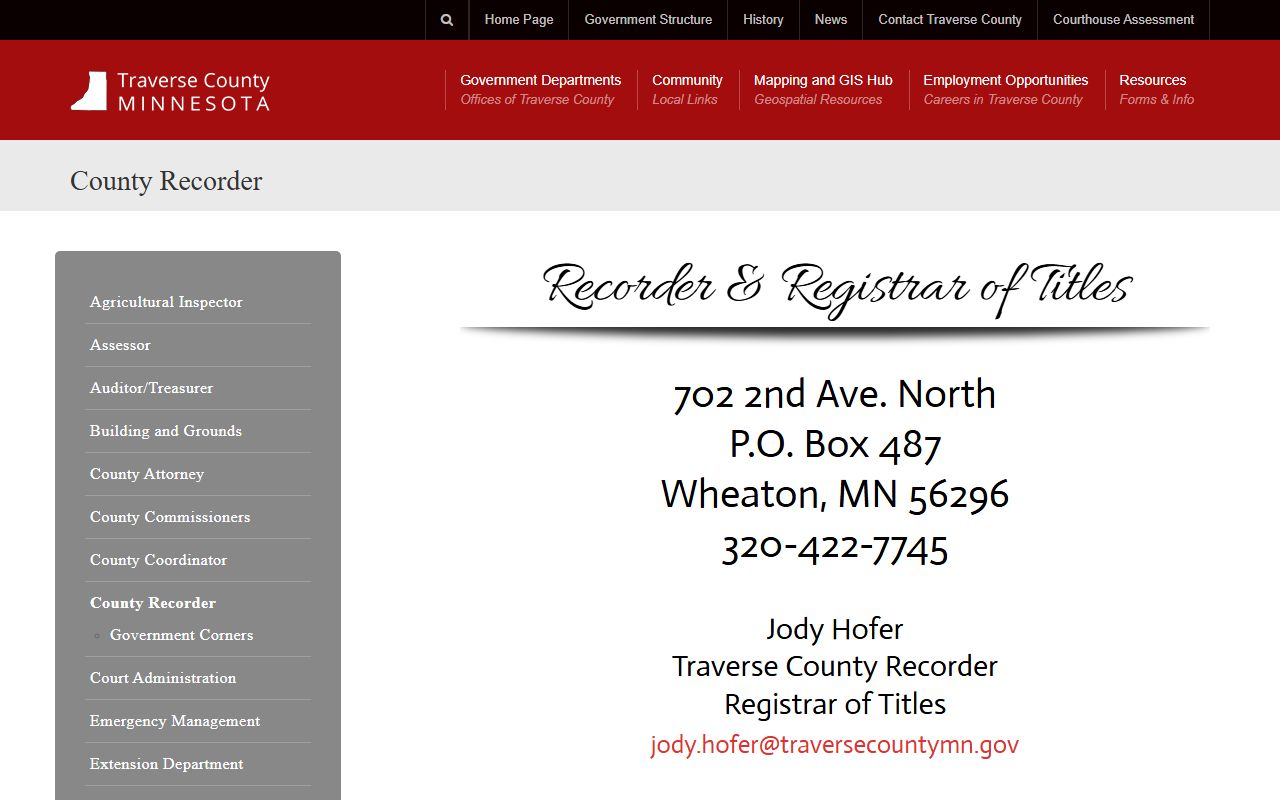
The Recorder is a separate office, which is the key distinction for marriage and land records in Traverse County.
How to Request a Certified Copy
Certified copies usually matter when the requester needs a document that another office will accept as official. MCRO downloads are helpful for review, but the research says they are not certified copies, and the court system recommends contacting court administration in the county where the document was filed for certification. For Traverse County, that means district court copies come from Court Administration, while marriage certificates come from the Recorder. The record type decides the office.
- Identify the case number, party name, or document title before contacting the office.
- Decide whether the request is for a district court record or a marriage/recorder record.
- Ask for a certified copy if the document will be used by a court, bank, insurer, or another official recipient.
- Use the courthouse counter, phone line, mail, or public online search to confirm the file location before paying for copies.
Source: Persons authorized to solemnize marriages.
This statute is useful on the records side because it shows why marriage work belongs with the Recorder, not the district court clerk.
Records Request Form Fields
Official county sources did not locate a Traverse-specific court-record request PDF, so the practical request path is still to contact Court Administration directly. When a requester describes the record clearly, the office can usually route the request to the right file. The most useful fields are the ones that help the clerk find the exact case or document quickly, especially when the request is for a certified copy or an older paper file that is not fully visible in MCRO.
| Field | Required | Notes |
|---|---|---|
| Case Number | Preferred | Best single identifier for district court files. |
| Party Names | Yes | Use the full names shown in the case if possible. |
| Document Type | Yes | Order, judgment, petition, decree, or another specific document name. |
| Number of Copies | Yes | Indicate whether plain or certified copies are needed. |
Traverse County Court Administration Fees
The county fee schedule is useful because it shows the difference between ordinary copies, certified copies, and filing fees. For someone dealing with Traverse County Court Administration, the key numbers are the copy and certification amounts, but the schedule also shows the district court filing fees that often come up in family, probate, and civil work. That makes the page useful both for record requests and for case filing questions.
| Item | Amount |
|---|---|
| Certified copy of instrument from civil or criminal proceeding | $14 |
| Certified printout of imaged or e-filed document from courthouse MNCIS view | $14 |
| Exemplified and certified copy | $28 |
| Uncertified copy of instrument from civil or criminal proceeding | $0 |
| Report generated from case management system, 1-50 pages | $5 |
| Report generated from case management system, 50+ pages | $25 per 50 pages or part |
| Civil first paper filed | $325 |
| Conciliation first paper filed | $80 |
| Dissolution of marriage | $405 |
| Probate first paper filed | $325 |
| Deposit of wills for safekeeping | $27 |
Common Clerk Forms
Traverse County does not publish a large local form inventory in the research file, so the most common clerk-side tools are the online record portals, the courthouse contact channels, and the related office links that explain where records really live. For district court records, MCRO is the public search tool. For marriage records, the Recorder and MOMS are the correct paths. For federal matters, PACER is separate. Those are the channels people use most often even when there is no county-specific paper request form.
- MCRO Case Search - district court case lookup.
- MCRO Document Search - public district court documents by case number.
- Court Administration - local district court contact point.
- County Recorder - marriage and recorded document contact point.
Mail and Online Filings
Traverse County Court Administration receives requests in person, by phone, and by mail, and the county research points users to the statewide court portals for online access. MCRO covers the public district court record side, while PACER covers federal cases and the PACER Case Locator helps route a federal search to the right district or appellate court. That keeps the online channels clean: Traverse county records through the Minnesota Judicial Branch systems, federal records through PACER.
Source: PACER access portal.
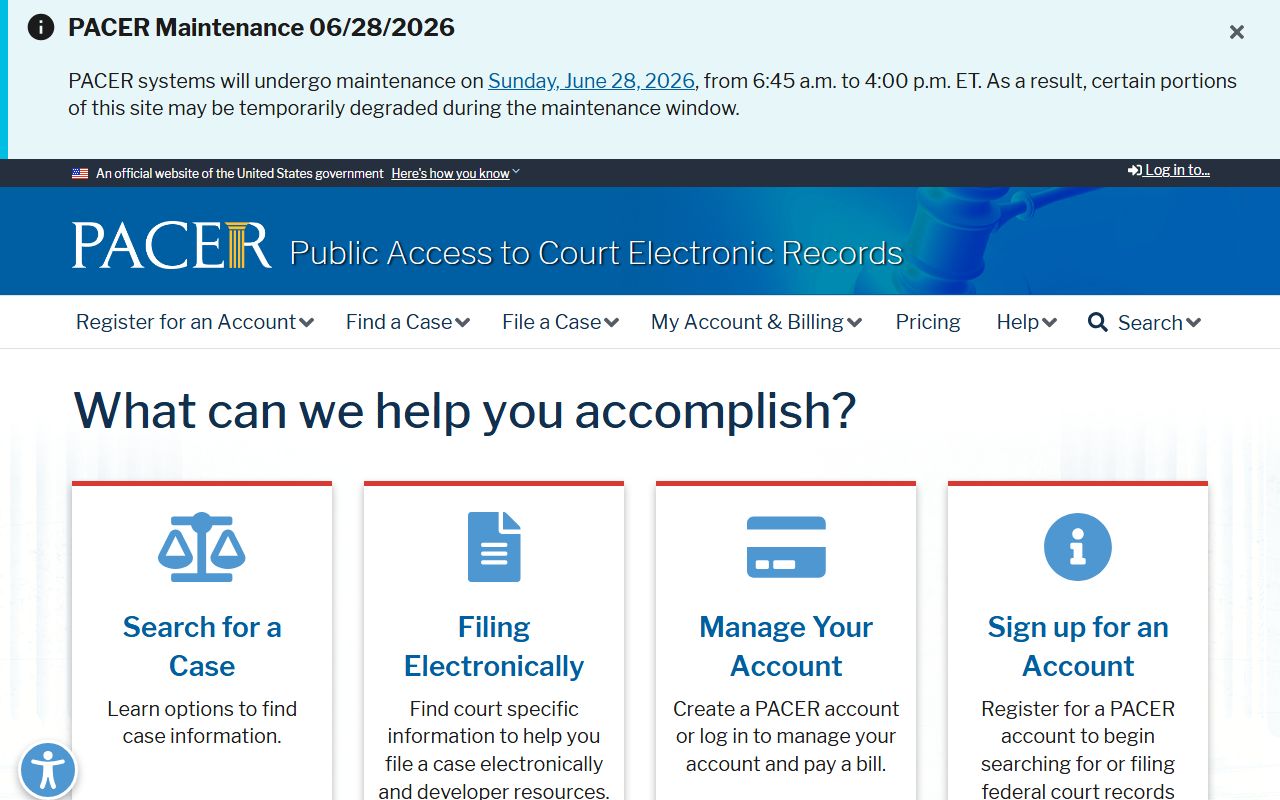
PACER is the federal follow-up path when a search leaves the county district court system.