
Traverse County District Courts Overview
Minnesota's judicial system places District Court at the trial level, with the Minnesota Court of Appeals above it and the Minnesota Supreme Court at the top. Traverse County sits in the Eighth Judicial District, which is an administrative district rather than a separate court that hears cases. The county research says the district court has original jurisdiction in civil, family, probate, juvenile, criminal, and traffic cases filed in Traverse County, and the local Court Administration page adds conciliation court case management to that list.
That means a search for Traverse County district court records starts with the district court itself, then moves to MCRO and the courthouse public access terminal. It also means the court is the right place for the kinds of records people often expect to find at a county courthouse: lawsuits, divorce files, custody cases, felony and misdemeanor matters, traffic citations, probate estates, and public judgments. The Eighth Judicial District office oversees the region, but it does not hear the individual Traverse County cases.
Source: Eighth Judicial District.
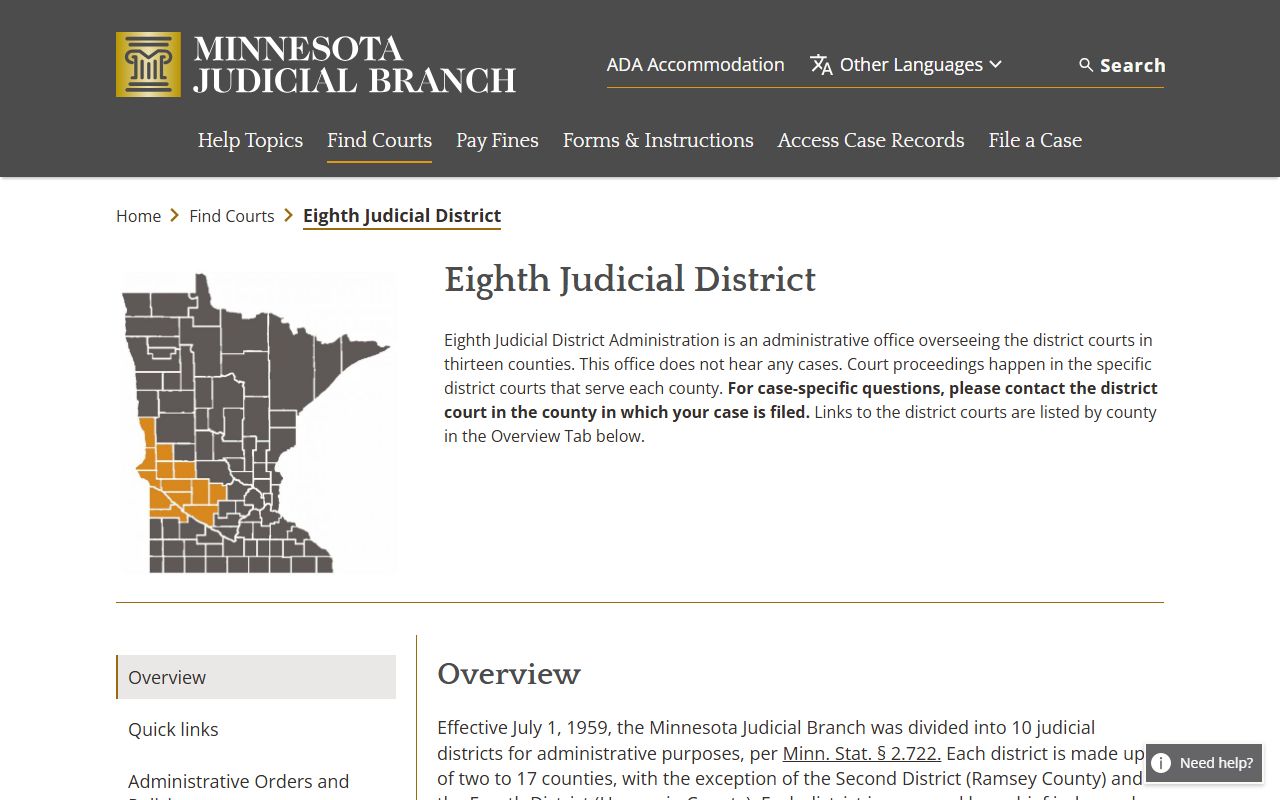
The district office is administrative, which is why the case itself still belongs in Traverse County District Court.
Source: Minnesota treatment courts.
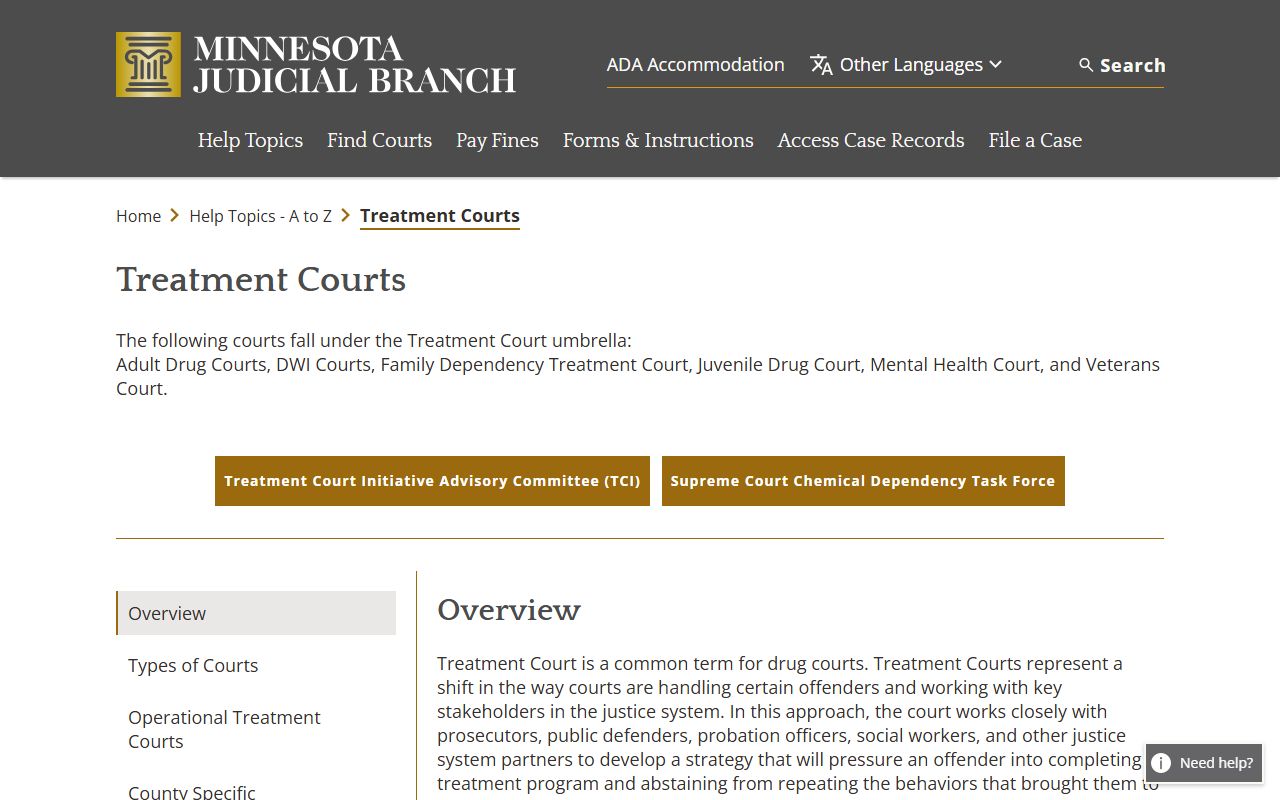
Treatment court programs sit within the district court system and help explain how specialty case tracks are organized.
List of Traverse County District Courts
Traverse County officially shows one district court location for trial-level matters. That single courthouse location handles the county's district court business, while the Eighth Judicial District office supplies the administrative framework behind it. Because the county does not use a separate county or JP court layer, the court list is short and the public search path is much simpler than in states with multiple local court systems.
| Court # | Type | Address | Phone |
|---|---|---|---|
| 1 | District Court | Traverse County Courthouse, 702 Second Avenue North, P.O. Box 867, Wheaton, MN 56296 | (320) 422-6010 |
District Court vs. County Court vs. Justice Court
Traverse County's court structure is simple because the official sources do not identify separate county court or justice court systems. Minnesota uses District Court as the trial court level, so the comparison below mainly shows what exists in Traverse County and what does not. When a user is looking for a case in this county, the district court side is the one that matters.
| District Court | County Court | Justice / JP Court | |
|---|---|---|---|
| Civil Limit | No separate county limit found | None found in Traverse County official sources | None found in Traverse County official sources |
| Criminal Jurisdiction | Felony, gross misdemeanor, misdemeanor, and traffic cases | None found in Traverse County official sources | None found in Traverse County official sources |
| Family Cases | Yes | None found in Traverse County official sources | None found in Traverse County official sources |
| Jury Size | Varies by case type | Not used | Not used |
How a Case Moves Through the Traverse County System
Once a case is filed, it usually moves from filing to service, then to motions or hearings, and finally to judgment or order. Criminal and civil cases follow different tracks, but they both begin in District Court when the case belongs in Traverse County. The public-access systems then pick up the case at different stages, with MCRO showing the case, documents, hearings, or judgments that are available online. For Traverse County users, that means the courthouse and the statewide portal are working together rather than competing with each other.
Criminal flow: Arrest › First appearance › Complaint or information › Arraignment › Pretrial › Trial › Sentencing › Appeal
Civil flow: Petition or complaint filed › Answer › Discovery › Motions or settlement talks › Trial or hearing › Judgment or order › Appeal
Civil, Family, and Criminal Divisions
The county research describes the district court as the place for civil, family, probate, juvenile, criminal, traffic, and conciliation work. That is the practical division map for Traverse County. Civil cases include ordinary lawsuits and other money or property disputes. Family cases include divorce, custody, support, and related orders. Criminal cases cover the county's public criminal filings, and traffic matters also sit inside the district court structure.
Specialty treatment-court programs exist within the district court system and are handled as part of the broader Minnesota treatment-court framework rather than as a separate county court. That distinction matters because it keeps the public from looking for a local specialty court that the county sources do not show. The courthouse and Court Administration office remain the anchor for all of those case types.
Source: Operational treatment courts.
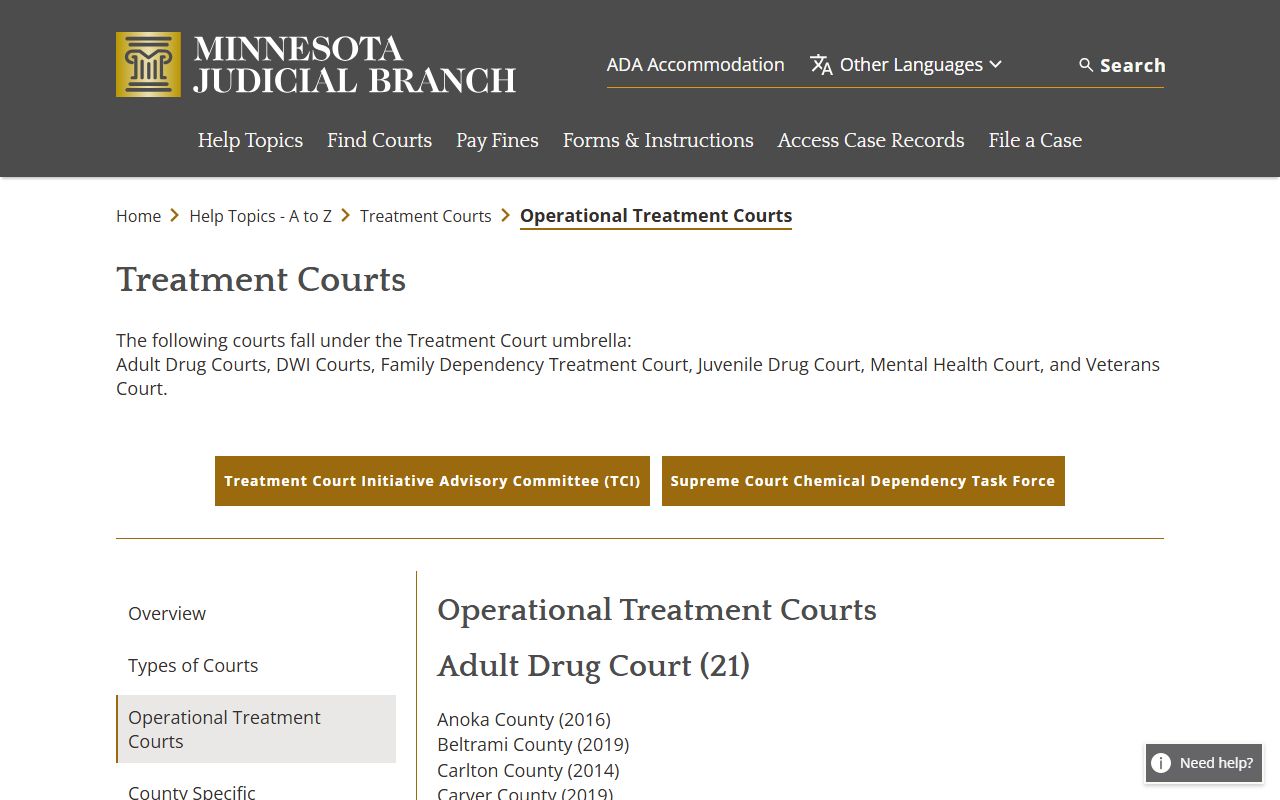
Operational treatment courts show how specialty programs stay inside the district court structure instead of becoming separate local courts.
Judicial Circuit / District
Traverse County is part of the Eighth Judicial District. The district is an administrative region that groups multiple county district courts together for management and support, but the actual hearings and filings still happen in the county district court. The county research also notes that Minnesota divided the state into judicial districts for administrative purposes under Minn. Stat. section 2.722. For a Traverse user, the practical point is simple: the district office is regional, but the courthouse case is local.
Magistrate and Lower Courts
Official Traverse County sources did not identify separate municipal, justice, or JP courts. That means there is no lower county-level court layer to search before District Court. A user trying to find a local small claim, traffic citation, family case, or criminal matter should go directly to Traverse County District Court and MCRO. The same is true for many specialty or administrative case questions, because the county uses one district court structure rather than multiple local courts.
Federal cases are separate from county district court records, so U.S. District Court, bankruptcy, and appellate matters belong in PACER rather than MCRO. The federal materials below are not local Traverse courts, but they help users avoid mixing county and federal records when a search gets broader than the county case itself.
Source: U.S. District Court for the District of Minnesota.
Federal trial court records are separate from Traverse County District Court records.
Source: U.S. Bankruptcy Court for the District of Minnesota.
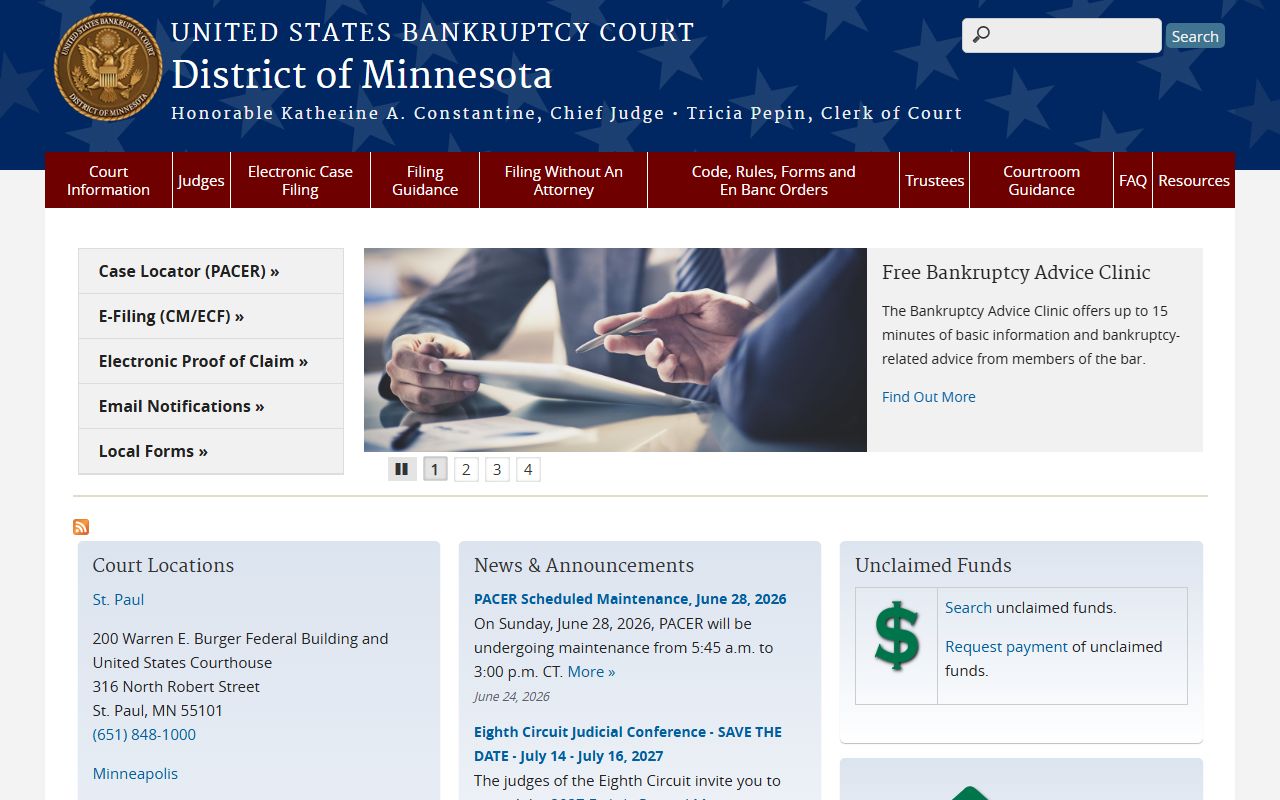
Bankruptcy matters are federal cases, so they use the federal court path instead of the county record system.
Source: U.S. Court of Appeals for the Eighth Circuit.
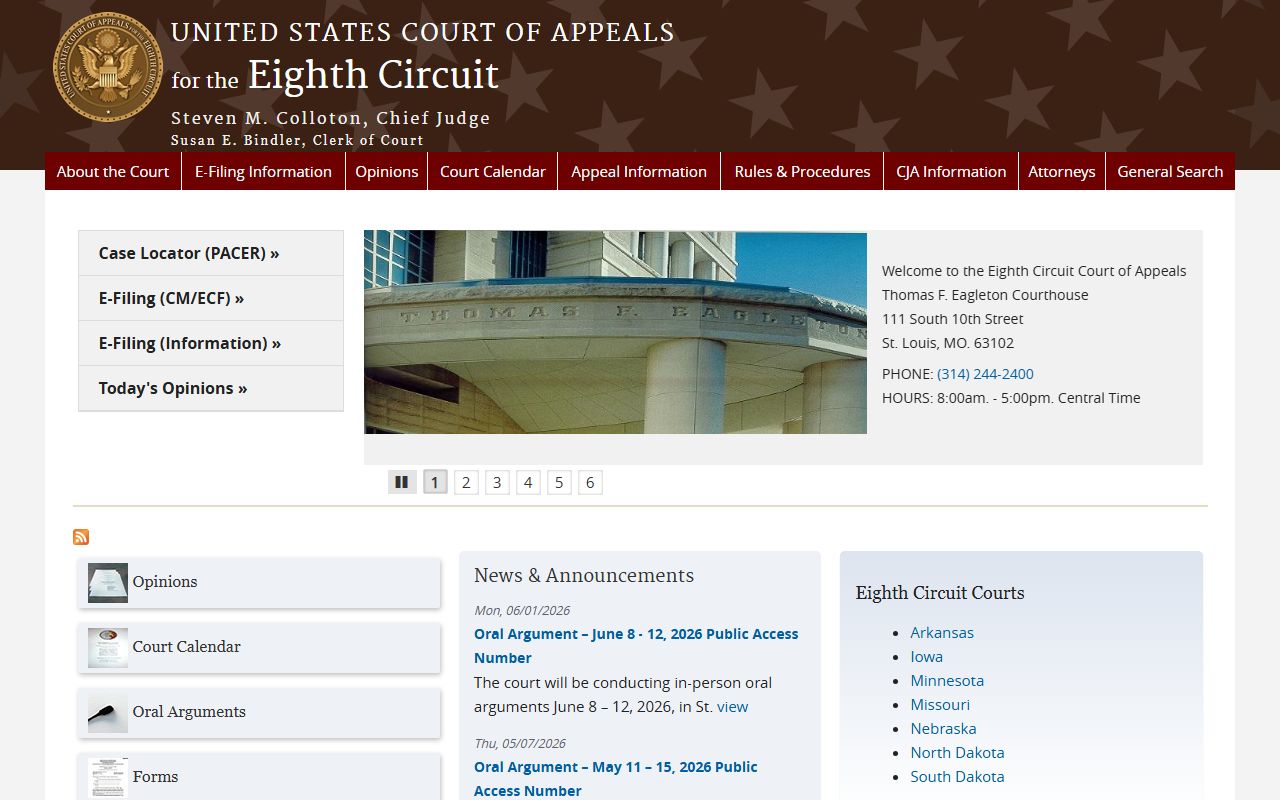
Appeals move into the federal appellate track only when the case itself belongs in the federal system.