
Criminal Court Records in Traverse County
Traverse County criminal court records are District Court records. Court Administration keeps the court file once a criminal case opens, while the County Attorney prosecutes many local criminal matters and the Sheriff handles arrest, custody, warrants, and jail records. The court file is the case-level record. It tracks what was filed with the court, what hearings occurred, how the defendant pleaded, what the judge ordered, and how each charge was resolved.
Official Minnesota and Traverse County sources did not identify a separate municipal, justice, or JP court for Traverse County. Criminal, traffic-criminal, juvenile-public, and related warrant matters route through District Court when filed locally. For the charge-level pathway after an arrest, use the arrest and charge record page; for all case types together, use the broader Traverse County court records search path.
How to Search Traverse County Criminal Court Records
MCRO Case Search is the main online portal for public Traverse County criminal court records. Search options include person name, business name, case number, citation number, attorney name, and attorney bar number. The case number or citation number is the safest route for pending criminal matters because the MCRO FAQ says defendant-name searches do not return pending criminal cases until conviction.
- Open MCRO Case Search and choose case number or citation number if known.
- Use person-name search for older or convicted public cases, with wildcard or Sounds Like if needed.
- Open Case Details and the Register of Actions to read charges, hearings, orders, pleas, and dispositions.
- Use Document Search only when the court file number is known and public online documents are available.
- Contact Traverse County Court Administration for certified copies, older records, or records not available remotely.
The Minnesota BCA public criminal history search is a separate state criminal-history tool under Minn. Stat. section 13.87. It is not the District Court file and should not be used as a substitute for the case docket, charging document, or sentencing order.
The Minnesota Attorney General's expungement guide is shown below because expungement is one reason a known criminal case may not appear in public search results.
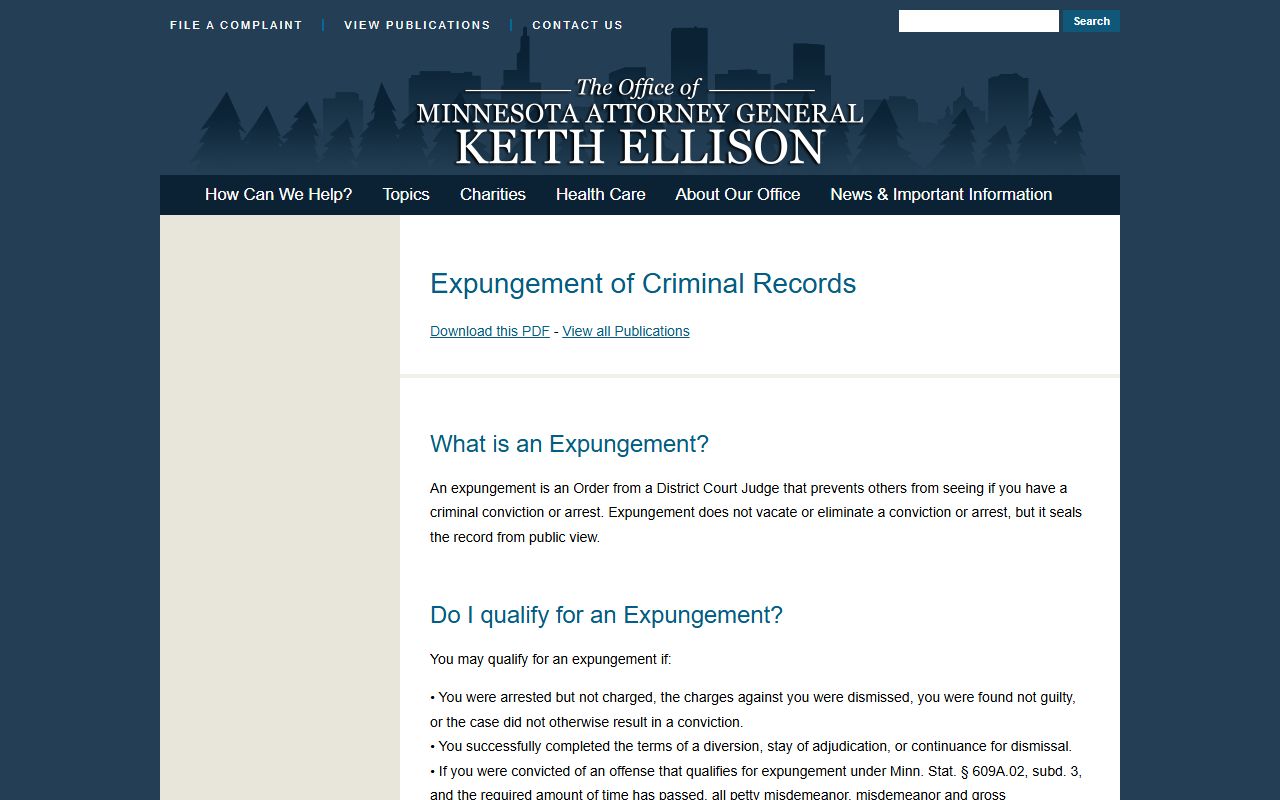
Expungement seals a record from public view, but it does not turn an online search result into the official legal outcome.
Stages of a Criminal Case
A Traverse County criminal case record grows as the case moves through District Court. Early entries may show the complaint, citation, summons, warrant, bail, or release conditions. Later entries can show arraignment, plea, pretrial hearings, motions, trial settings, amended charges, dismissal orders, sentencing, restitution, fines, probation, and warrants for failure to appear or violation.
Case flow: Charges Filed › Arraignment › Pretrial / Motions › Plea or Trial › Disposition › Sentencing
| Stage | What Happens |
|---|---|
| Arraignment | The defendant is advised of the charge and enters or prepares for a plea. |
| Pretrial / Motions | Parties litigate evidence, scheduling, release terms, discovery, and possible plea terms. |
| Plea or Trial | The case resolves by plea, dismissal, bench trial, jury trial, or other court order. |
| Sentencing | The court imposes custody, probation, fines, restitution, conditions, or other lawful consequences after conviction. |
The criminal expungement petition statute is an important later-stage record source for sealed criminal records.
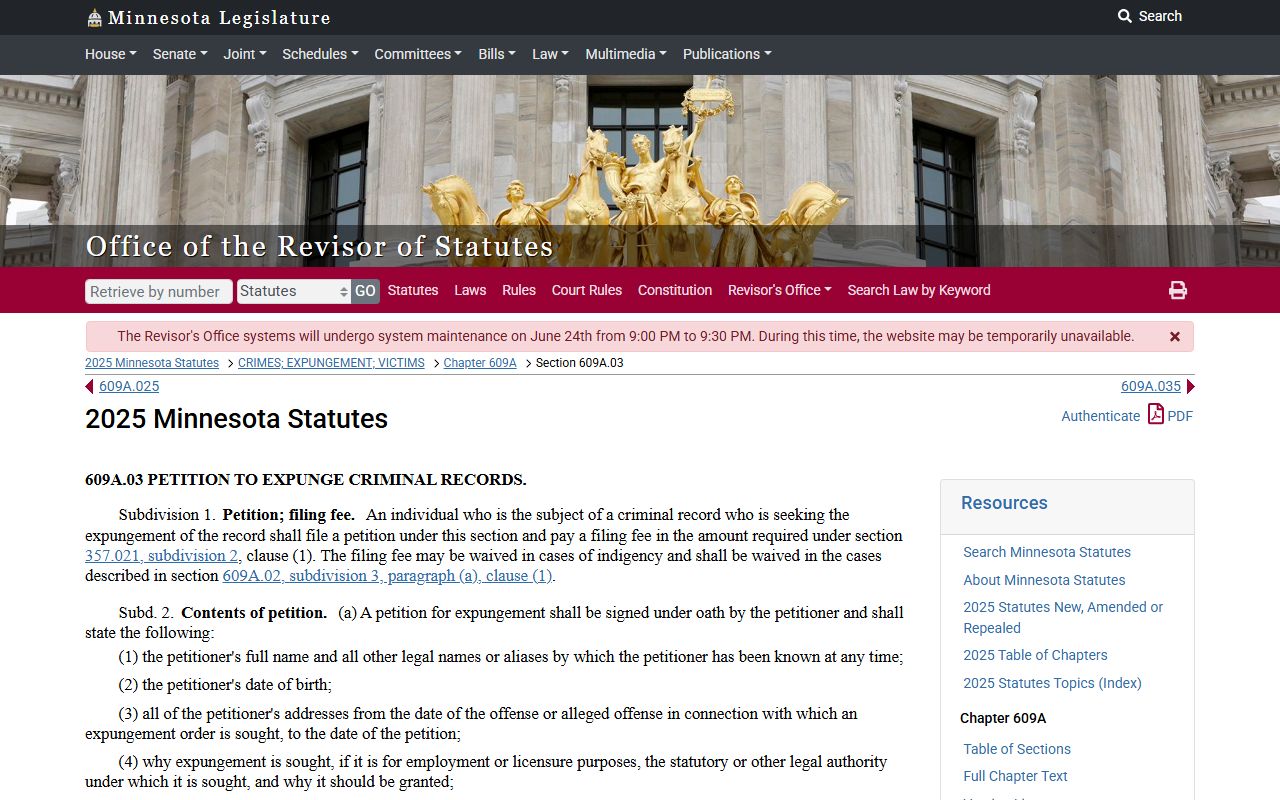
Expungement petitions are District Court filings and may affect public access to the underlying criminal court record.
What a Traverse County Criminal Court Record Shows
Criminal case details in MCRO and court records can include the court file number, party names, charges, statute numbers, offense level, plea, conviction, disposition, sentence, financial obligations, and warrant flags when public. MCRO warns that an Active Warrant flag on party information may or may not relate to the specific case being viewed, so the case details and Court Administration should be used to verify warrant context.
| Field | What It Shows |
|---|---|
| Case Number | Minnesota court file number used to search the criminal case and request copies. |
| Defendant | The person charged, subject to public-access and pending-case name limits. |
| Charges | Offense text, statute number, severity level, and amended or dismissed charge status when public. |
| Plea | The defendant's response, such as guilty or not guilty, when entered and public. |
| Disposition | The outcome of each charge, including conviction, dismissal, acquittal, or other resolution. |
| Sentence | Custody, probation, fines, restitution, conditions, and related orders after conviction. |
The official Traverse County Attorney page is relevant because the County Attorney is the local elected prosecutor for many criminal matters.
The prosecutor's role is separate from Court Administration, which maintains the filed court case record.
Charges vs. Convictions
A charge is an accusation filed or presented to the court. A conviction is a legal outcome after a guilty plea, verdict, or qualifying disposition. Traverse County criminal court records may show charges that were amended, reduced, dismissed, or resolved without conviction. That distinction matters when comparing a court file to BCA criminal history or a jail roster entry.
| Charge | Conviction | |
|---|---|---|
| Stage | Accusation | Verdict or plea |
| Burden of Proof | Probable cause | Beyond reasonable doubt |
| Public Record | Often public when filed, subject to pending-case and access limits | Generally public unless sealed, expunged, juvenile-restricted, or otherwise nonpublic |
Reading Dispositions and Sentences
Read each count separately. One Traverse County criminal case can have several charges, and each charge can end differently. The record may show a plea on one count, a dismissal on another, and a sentence tied only to the conviction count. A disposition is the outcome; a sentence is the court-ordered consequence after conviction.
Financial data can include fines, surcharges, restitution, and balances due. Court records can also show probation terms, custody credit, sentence level, and later violation or warrant activity. For custody status after sentencing to state prison or DOC supervision, use the Minnesota DOC public viewer instead of treating the old court docket as a live custody record.
Sealed vs. Expunged Records
Sealed and expunged records are not ordinary missing records. Minnesota expungement is a court order that seals a criminal record from public view. The Attorney General explains that expungement does not erase the underlying event; it limits who can see it. Juvenile delinquency records, civil commitment records, adoption records, and certain protected personal identifiers also have separate confidentiality rules.
| Sealed | Expunged | |
|---|---|---|
| Visibility | Not open to general public access without authority | Sealed from public view by District Court order |
| Reason | Confidential case type, protected data, or court order | Criminal expungement petition and order under Minnesota law |
| Access Path | Ask Court Administration what rule or order controls access | Review the expungement order or seek legal authority for access |
Minnesota juvenile delinquency record law is shown below because juvenile criminal-style records have access rules different from adult criminal cases.
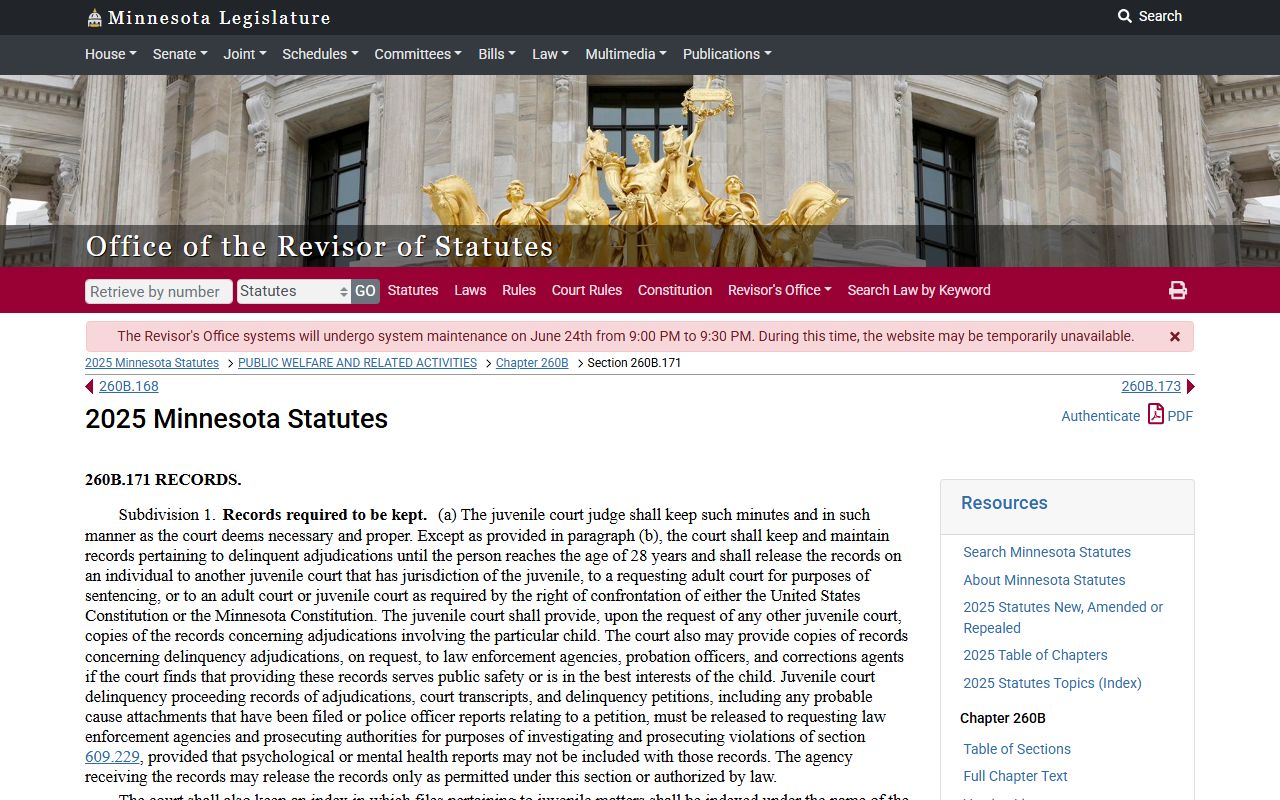
Juvenile records should not be described as broadly searchable adult criminal court records.
Public Access to Criminal Court Records
Public access to Traverse County criminal court records comes from Minnesota court access rules and related statutes. Rule 4 identifies nonpublic case-record categories, while Rule 8 governs inspection, copying, bulk distribution, and remote access. BCA public criminal history is governed separately by Minn. Stat. section 13.87.
Key Statutes:
Minn. Stat. section 13.87 - governs public criminal history data and BCA search limits.
Minn. Stat. section 609A.03 - provides the petition process for criminal expungement.
Minnesota juvenile disposition and expungement law adds another layer when a criminal-style matter involves juvenile court.
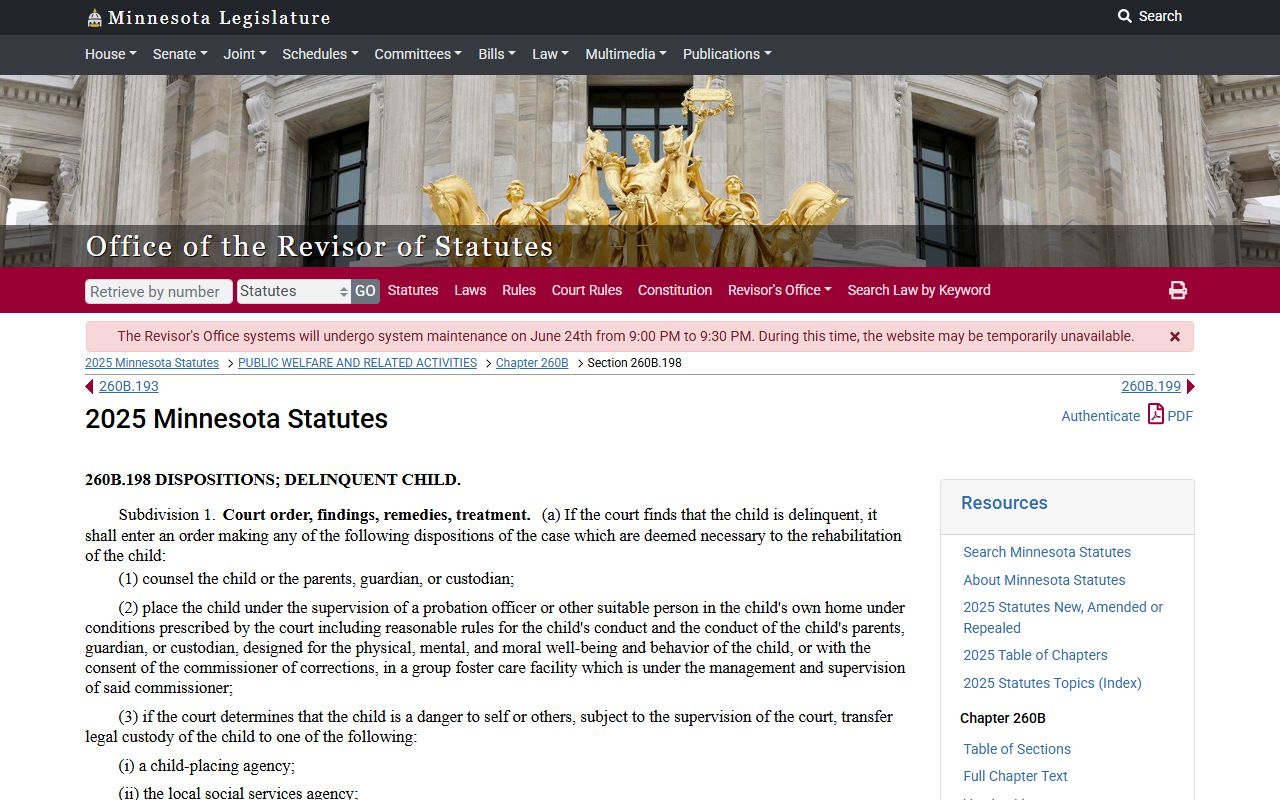
Adult criminal court records, juvenile records, and BCA criminal history must be checked in the correct system.
Background Check Considerations
Casual public-record lookup is not the same thing as an FCRA-compliant background check. Court records can be incomplete, sealed, delayed, or limited by case type. A court case can show charges that did not become convictions, and a BCA record can summarize criminal-history data without showing the full court file. Employment, housing, credit, insurance, and similar screening uses require lawful consumer-reporting procedures.
Important: Public court lookup is not a consumer report and should not be used for FCRA-regulated screening decisions.
The Minnesota Judicial Branch warned in 2025 about judicial scams targeting Minnesotans, including false demands tied to court appearances or payment.
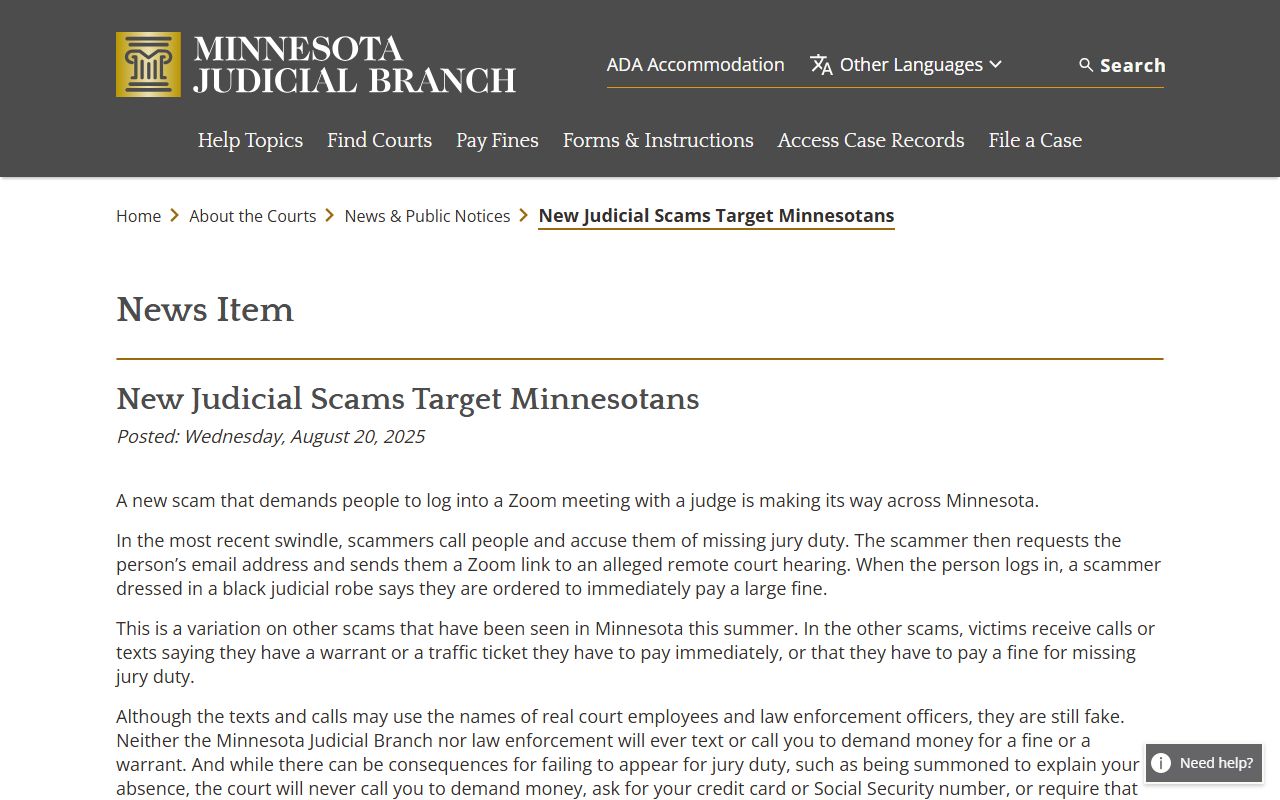
Verify payment demands, warrant claims, and court-date notices through official Court Administration or Sheriff numbers.
Restricted Criminal Court Records in Traverse County
Restricted Traverse County criminal court records include sealed or expunged cases, many juvenile matters, protected victim identifiers, medical or psychological records filed under nonpublic cover sheets, and certain pre-service domestic abuse or harassment data. Pending criminal defendant-name searches also have remote-access limits in MCRO. If a case should exist but does not appear, search by case number or citation number and contact Court Administration for the correct access path.