
How to Search Traverse County Court Records
Minnesota Court Records Online, usually called MCRO, is the statewide public portal for Traverse County court records. MCRO connects to Minnesota District Court case data, so it is the first online channel for public case details, registers of actions, hearing information, money judgments, and public documents that the Judicial Branch makes available for remote access. The same portal covers Traverse County District Court because Minnesota does not use a separate county court or justice court system for local trial cases.
Start with the strongest identifier available. A case number or citation number is more reliable than a name, and it matters most in pending criminal cases. The MCRO FAQ says a defendant-name search will not return a pending criminal case if no conviction has been entered. If a case is older, certified, restricted, or not posted online, the fallback is the courthouse public terminal or Traverse County Court Administration.
- Open MCRO Case Search and choose name, business, case number, citation number, attorney name, or attorney bar number.
- Use case number or citation number for pending criminal and traffic matters when available.
- Review Case Details and the Register of Actions for parties, case events, hearings, dispositions, charges, judgments, and public documents.
- Use Document Search only when the court file number is known and a public online document is needed.
- Use Hearing Search or the Traverse daily calendar for hearing dates, then contact Court Administration for certified copies or missing records.
The MCRO overview is shown in the image below, which is one of the official Minnesota Judicial Branch access points used for Traverse County court records.
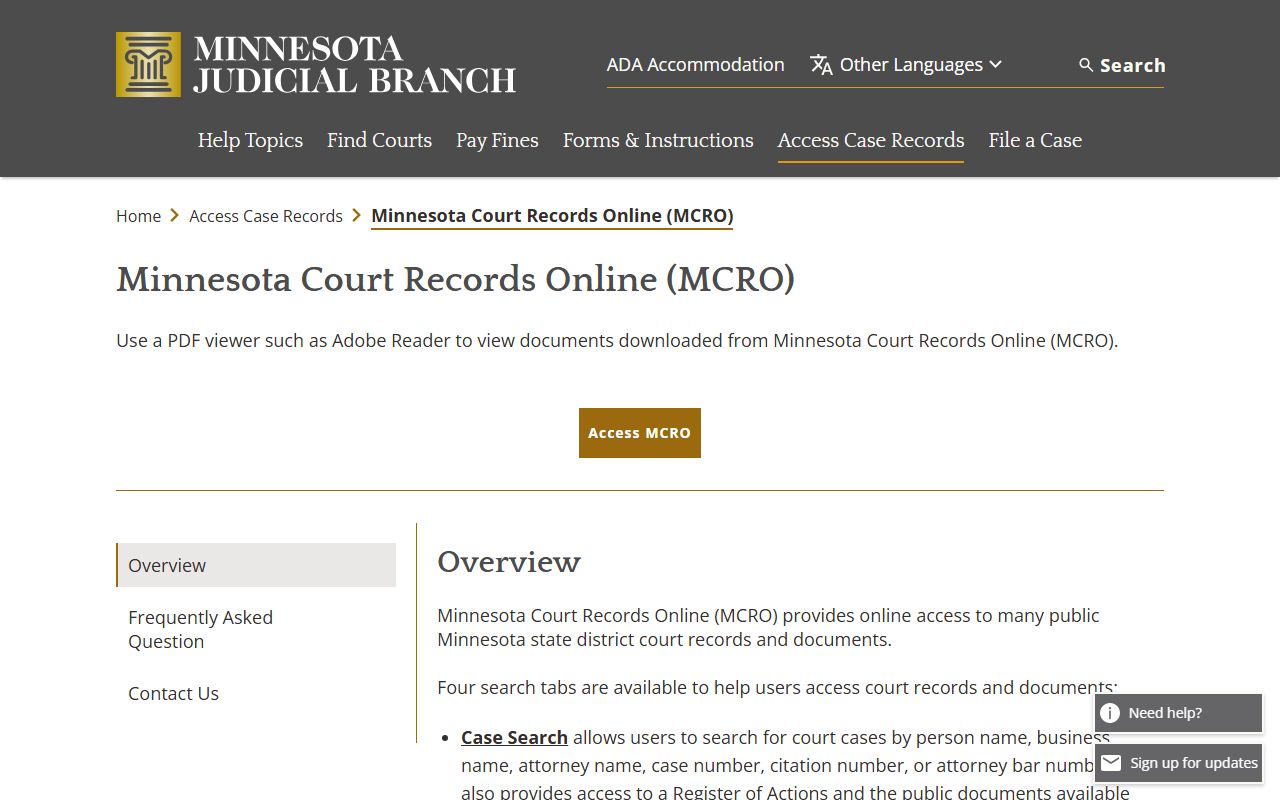
That statewide access point is useful, but it does not replace the local court counter when a certified copy, older paper file, or non-remote record is needed.
Traverse County Court Records Search Fields
MCRO separates searches by case, document, hearing, and judgment function. For a broad Traverse County court records search, Case Search is the usual start. Document Search is narrower because it requires the case number. Hearing Search can help when the goal is a court date rather than a full case file, while Judgment Search is for docketed money judgments by debtor name.
| Field Label | Type | Required | Notes / Format |
|---|---|---|---|
| Person or Business Name | Text | Conditional | Exact-name style search; wildcard and Sounds Like options can broaden results. |
| Case Number | Text | Conditional | Use court file numbers with letters, numbers, and hyphens, such as Traverse samples beginning with 78. |
| Citation Number | Text | Conditional | Useful for traffic and citation-based criminal matters. |
| Attorney Name or Bar Number | Text | Conditional | Can locate cases tied to a lawyer when party-name access is limited. |
| Document Search Case Number | Text | Yes | Required for public document downloads available through MCRO. |
| Judgment Debtor Name | Text | Yes | Used in Judgment Search for docketed money judgments. |
The official MCRO Case Search screen is the public interface for the name, case number, citation, attorney, and bar-number options listed above.
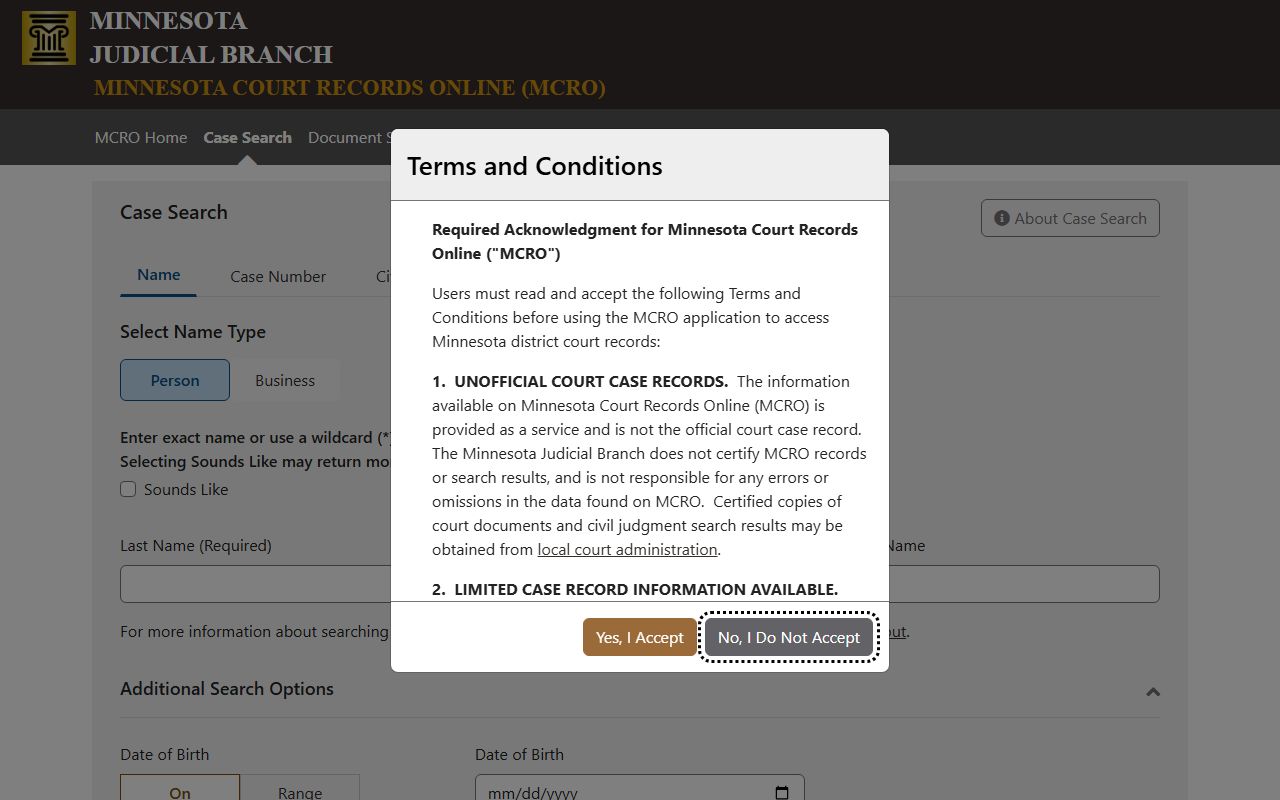
Case Search is best for finding the court file first; document and hearing tools become more useful after the file number is known.
Types of Traverse County Court Records
Traverse County District Court is the trial court for civil, family, probate, juvenile, criminal, traffic, and conciliation matters filed in the county. Court Administration manages record keeping and case flow for these District Court files. The County Recorder is separate and handles marriage, vital, real estate, notary, and lien records, so a marriage certificate search should not be treated as a court case lookup.
MCRO does not show every document for every case type. Civil, criminal, probate, guardianship, conservatorship, trust, judgment, and traffic records may have broader online coverage. Family case types are narrower online and often show court-prepared orders, notices, and appellate opinions instead of every party-filed document. Juvenile, adoption, civil commitment, sealed, and expunged files can be partly or fully restricted.
- Civil and conciliation records: complaints, answers, motions, orders, judgments, satisfaction filings, and small-claims-style conciliation entries.
- Criminal and traffic records: complaints, citations, charges, pleas, hearings, dispositions, sentences, fines, and warrant flags when public.
- Family and divorce records: dissolution, custody, support, paternity, and related orders, with limited document access online.
- Probate records: estates, trusts, guardianships, conservatorships, deposited-will references, inventories, and orders when public.
- Judgment records: docketed money judgments and satisfactions searched by debtor name.
What Traverse County Court Records Show
Traverse County court records use Minnesota court file numbers, case type codes, party roles, hearing entries, and Register of Actions events. The researched daily calendar included examples such as 78-PR-26-59 and 78-CO-26-11. The 78 prefix identifies Traverse County in those samples, while PR marks probate and CO marks conciliation. Traffic and criminal guidance also notes CR for cases requiring appearance and VB for payable offenses.
| Field | What It Shows |
|---|---|
| Case Number | County prefix, case type code, year, and sequence used to identify the court file. |
| Case Type | Probate, conciliation, criminal, traffic, civil, family, judgment, or another District Court category. |
| Parties | Names and roles such as plaintiff, defendant, petitioner, respondent, decedent, attorney, or debtor. |
| Events | Register of Actions entries for filings, hearings, notices, orders, and judgments. |
| Disposition | The outcome of a charge, claim, motion, judgment, or case when public. |
| Documents | Public pleadings, orders, notices, judgments, and court-generated materials available online or at the courthouse. |
The MCRO Document Search image below shows the case-number driven path for public documents in Traverse County court records.
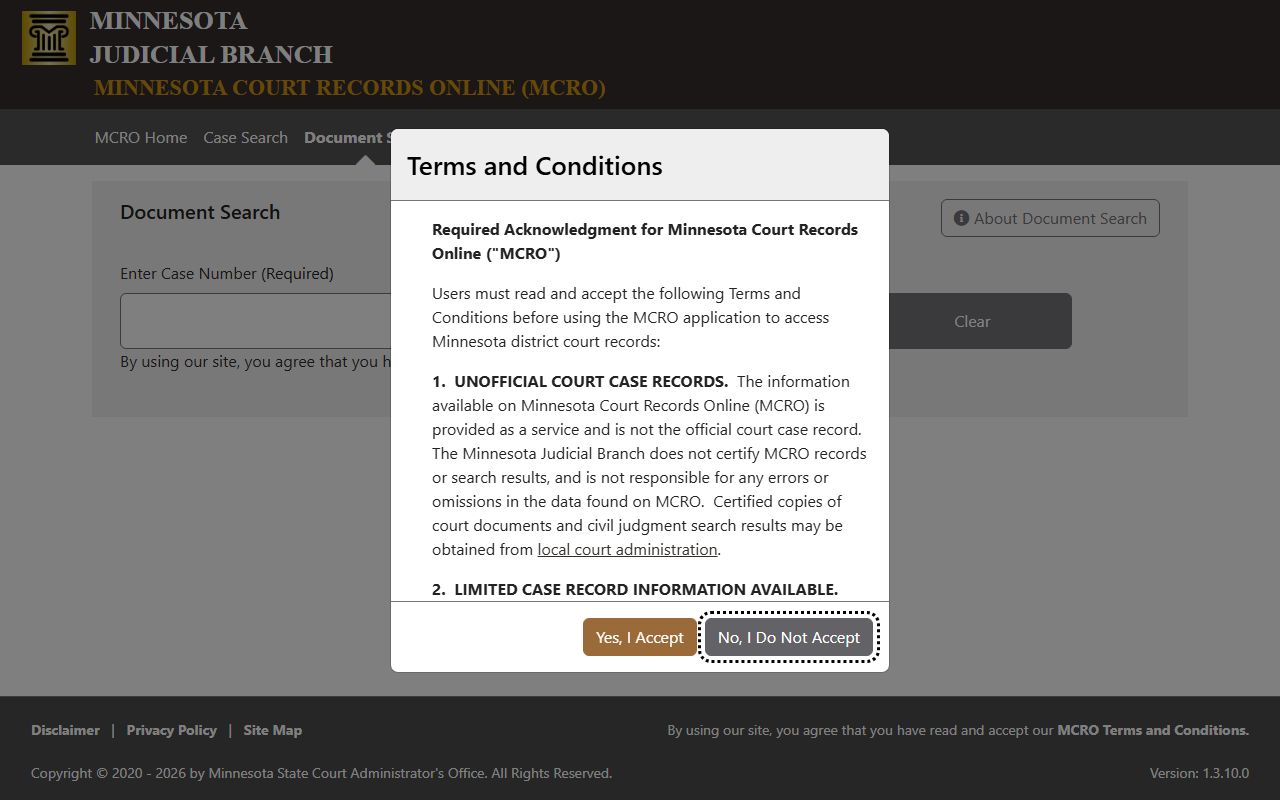
Document availability depends on case type, filing date, and access rules, so a blank document search does not always mean the case does not exist.
Public Access Framework for Traverse County Court Records
Minnesota gives public access to many court records, but court records are governed by Judicial Branch access rules, not only by general government-data law. Minn. Stat. section 13.03 supports access to public government data unless a law classifies it otherwise. For court case records, the Minnesota Rules of Public Access to Records of the Judicial Branch control what is public, what is remote, and what must be reviewed at a courthouse.
Public courthouse terminals provide the most complete electronic access to public District Court case records. Certified copies must come from Court Administration in the county where the document was filed because MCRO downloads are not certified. The Traverse fee schedule lists certified copies from civil or criminal proceedings at $14, exemplified and certified copies at $28, uncertified copies at $0, and generated case-management reports at $5 for 1 to 50 pages.
Note: Online access is broad, but certified, older, sealed, and non-remote records still require Court Administration or courthouse terminal review.
The MCRO Hearing Search tool shown below helps locate scheduled Traverse County hearings when the hearing data is public and remotely available.
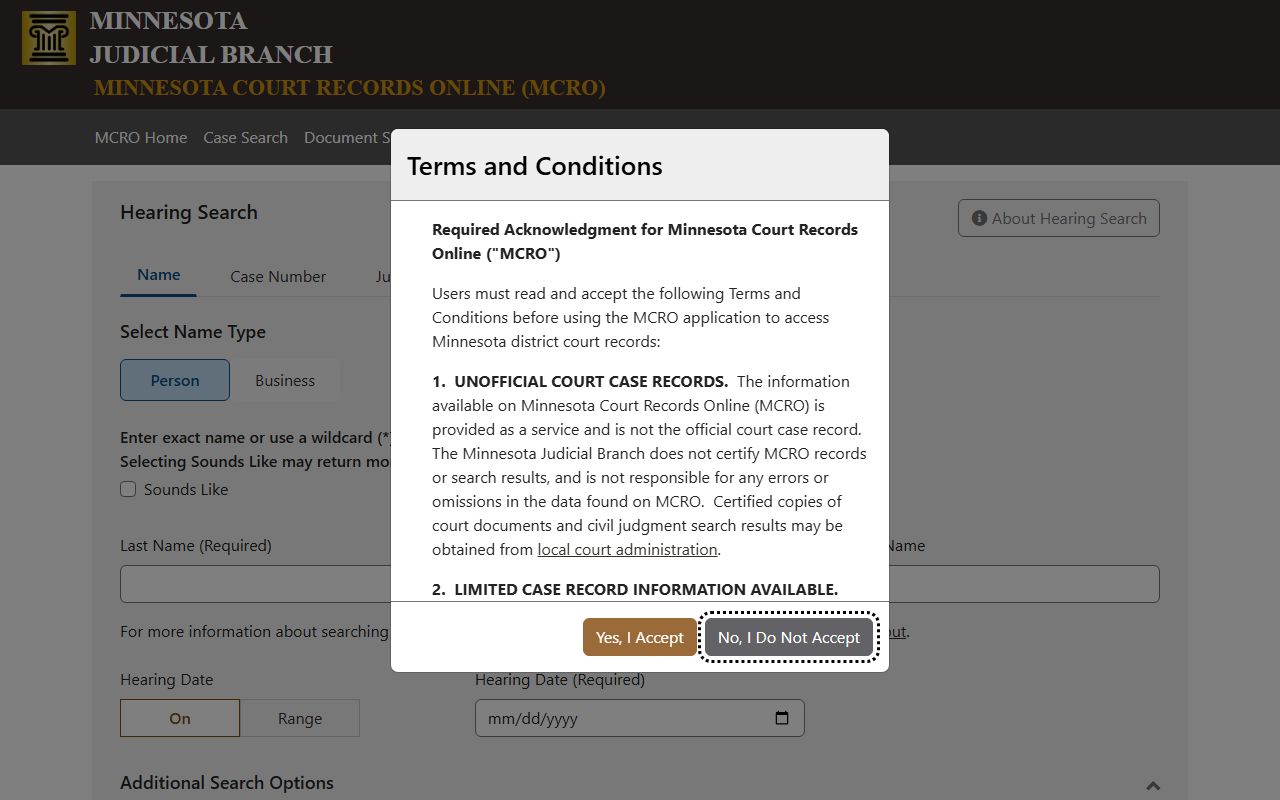
Hearing Search should be cross-checked with the daily calendar or the court counter when timing matters, since calendars can change.
Records That Are Sealed or Confidential in Traverse County
Rule 4 lists court records that are not accessible to the public. In Traverse County court records, common restricted areas include many juvenile matters, adoption records, civil commitment medical records, domestic abuse or harassment data before service, minor-victim identifiers, Social Security numbers, financial source documents, and wills deposited for safekeeping during the testator's lifetime. Expunged cases may not appear in MCRO at all.
When a record is sealed or expunged, public access usually requires a court order or legal authority. Minn. Stat. section 609A.03 governs criminal expungement petitions, while juvenile access is shaped by Minn. Stat. section 260B.171. The practical first step is to identify the case number, then ask Court Administration what access process applies.
The MCRO FAQ screenshot below is relevant because it explains why a known case may not appear in a Traverse County court records search.
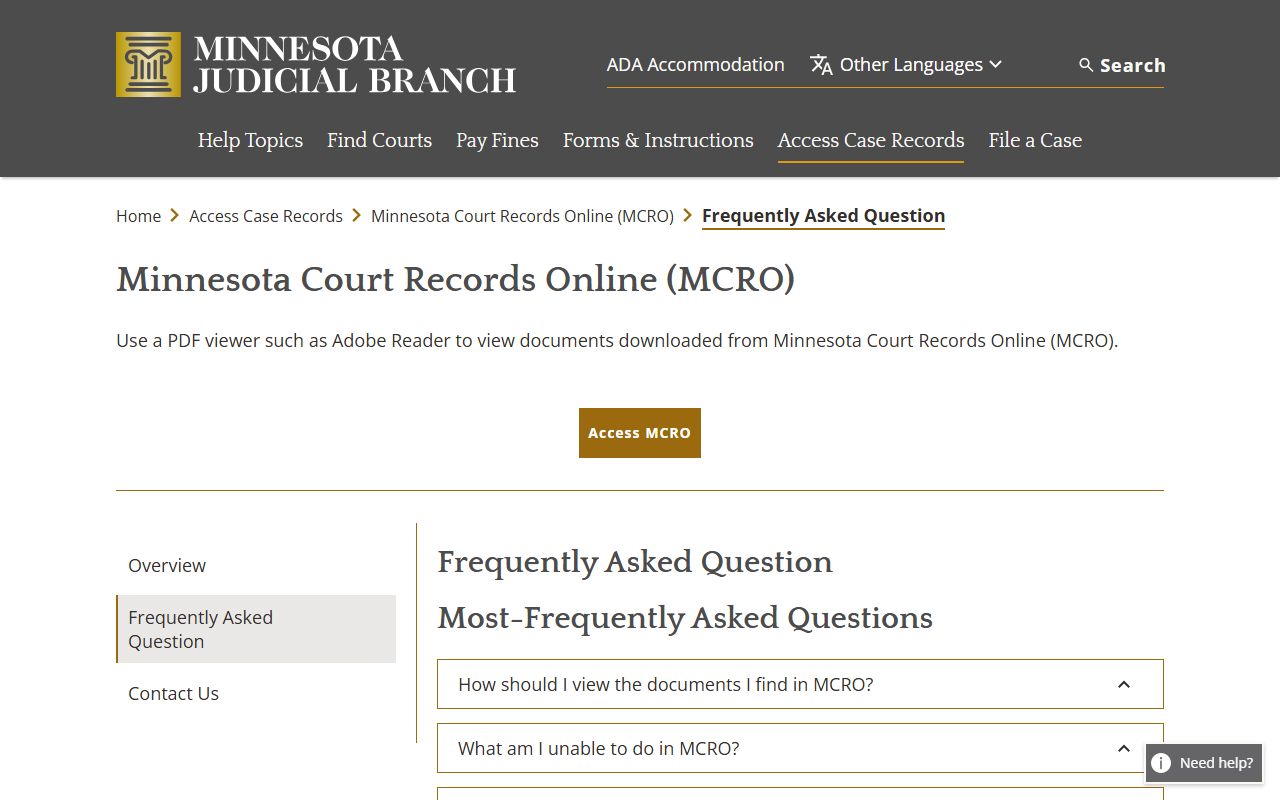
Those limits are especially important for pending criminal name searches, expunged files, older records, and case types excluded from remote public access.
In-Person Court Record Requests
Traverse County Court Administration is the local counter for District Court records, certified copies, and public paper files stored locally. The courthouse channel matters when MCRO does not show the case, when a document is not available for download, or when a certified copy is needed for legal use. Call before traveling if the case is old, restricted, or missing from online search results.
Traverse County Court Administration
702 2nd Ave. North, P.O. Box 867
Wheaton, MN 56296
(320) 422-6010
Monday-Friday, 8:00 a.m.-4:30 p.m.
Use MCRO Judgment Search for docketed money judgments before requesting a paid or certified judgment search from the court counter.
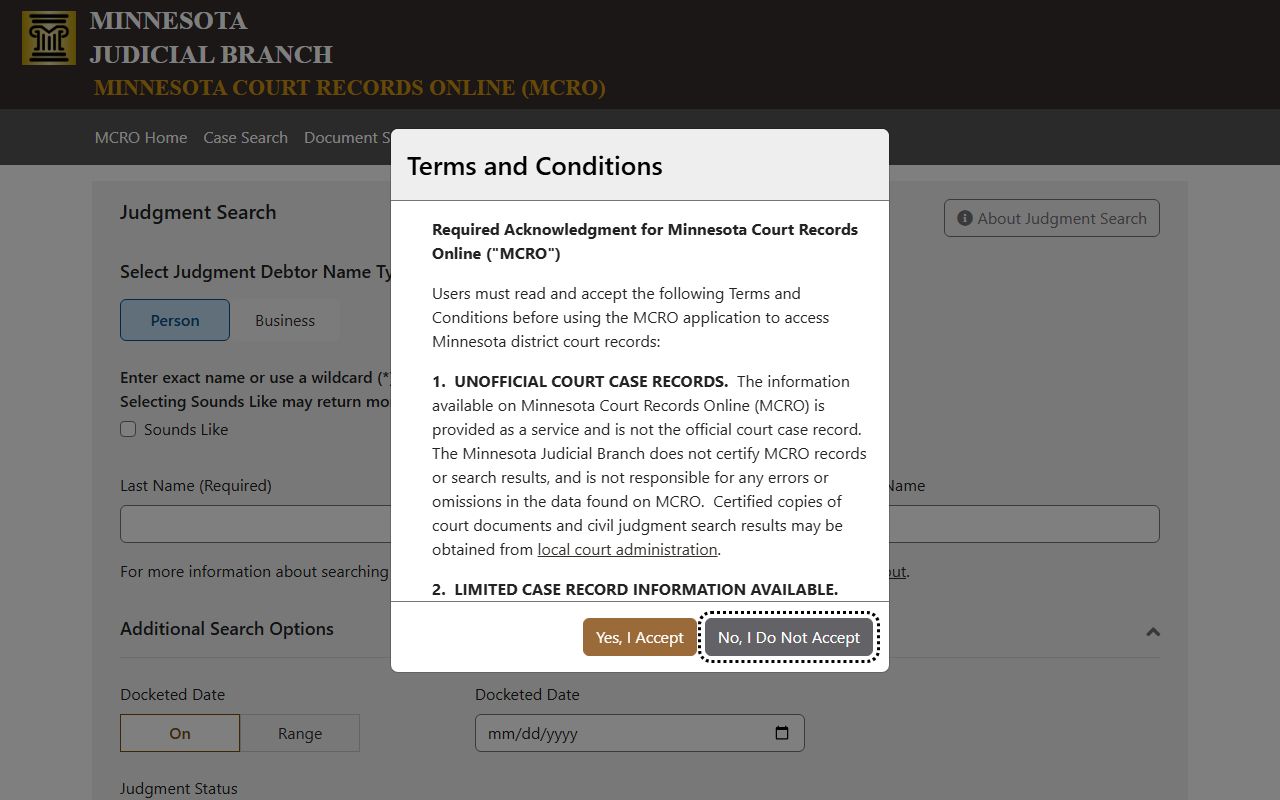
Judgment Search is separate from case search because it is keyed to the debtor name and the judgment docket rather than every case event.